ISO/IEC 17025:2017 Certification
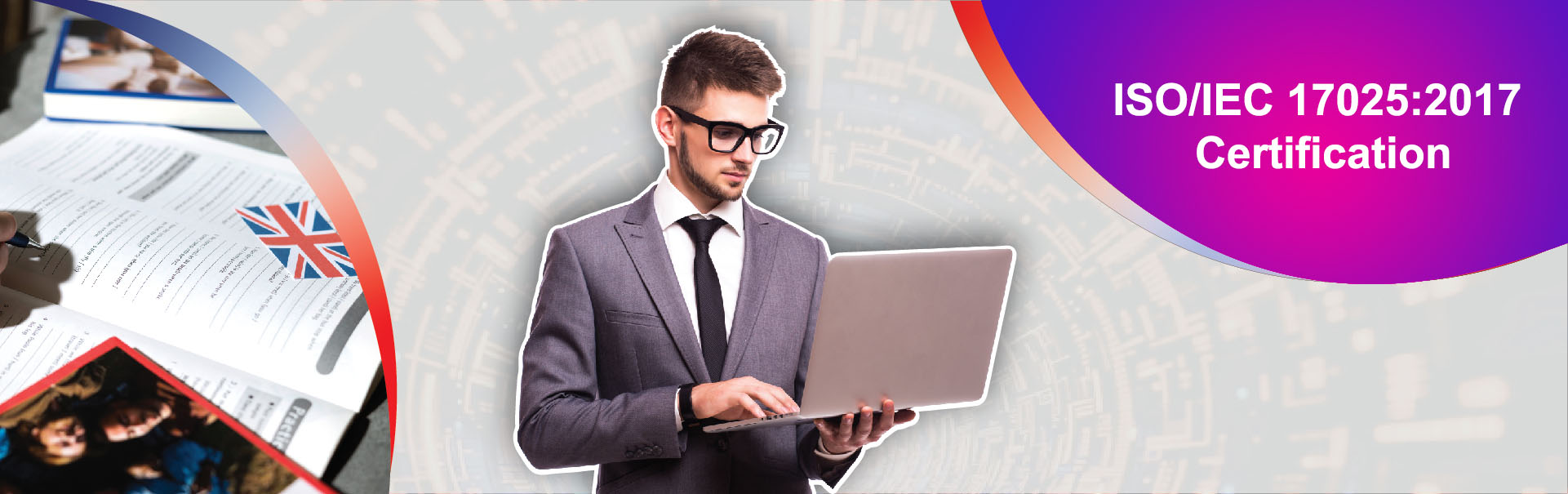
ISO/IEC 17025:2017 is the internationally recognized standard that specifies the general requirements for the competence, impartiality, and consistent operation of testing and calibration laboratories. The standard ensures laboratories produce technically valid, accurate, and reliable results. It is applicable to all organizations performing laboratory testing and calibration activities, regardless of size or field of operation.
Purpose of ISO/IEC 17025
The main objective of ISO/IEC 17025 is to:
- Demonstrate technical competence
- Ensure accuracy and reliability of test results
- Improve laboratory operations
- Enhance international acceptance of reports
- Support regulatory compliance

Who Should Implement ISO/IEC 17025?
ISO/IEC 17025 is suitable for:- Testing laboratories
- Calibration laboratories
- Food packaging companies
- Storage and transportation providers
- Agricultural producers
- Beverage companies
- Retailers and wholesalers
Key Requirements of ISO/IEC 17025:2017
The standard is structured into the following key areas:- General Requirements
- Structural Requirements
- Organizational structure
- Resource Requirements
- Process Requirements
Benefits of ISO/IEC 17025 Certification
The standard includes:- Technical Competence Recognition
Demonstrates laboratory capability and reliability. - International Acceptance
Enhances global recognition of laboratory reports. - Improved Accuracy
Ensures valid and traceable measurement results. - Risk Reduction
Identifies and controls operational risks. - Competitive Advantage
Strengthens credibility in domestic and international markets. - Operation
Monitoring, measurement, internal audit, and management review. - Performance Evaluation
Corrective actions and continual improvement.
ISO 17025 Certification Process
- Gap Analysis
- Complaint Handling Policy Development
- Process Documentation
- Staff Training
- System Implementation
- Internal Audit
- Certification Audit
- Certificate Issuance Surveillance audits are conducted annually to ensure continued compliance.
Frequently Asked Questions
In the short term, you may continue to work with the Client Relations Manager who has been assisting you through the selection process. However, for audit-related information, your primary contact, and the person best equipped to help you will be your assigned lead auditor.
All of my audit scheduling. | reviewing my documents prior to the Certification Audit. | Coordinating and conducting my Certification Audit. | Interpretations on my quality management system standard.
Your assigned lead auditor will want to discuss your expected timing for the required certification activities such as document review and the initial assessment. He/she will need to know if you have elected to have a pre-assessment.
Your assigned lead auditor could be “booked” as far ahead as 3 to6 months or more. It is a good idea to “reserve” time on their schedule that is realistic and achievable. Should you cancel a scheduled time without ample notice, your assigned lead auditor may or may not be able to accommodate your needs. In that case, another lead auditor may be assigned to your account.
There are 3 basic steps to a certification process and they are: ✓ Document review. ✓ Initial Assessment. ✓ Certification Panel Review of recommendation.
Once the recommendation is accepted by the Certification Panel team you could expect your formal certificates in about 7 to 12 working days, which is approximately 2 weeks from the initial audit.
Empowering businesses with trusted certification & compliance solutions
- ISO 9001 2015
- ISO 9001 2015
- ISO 9001 2015
- ISO 9001 2015
- ISO 9001 2015
- ISO 9001 2015
- ISO 9001 2015
- ISO 9001 2015
- ISO 9001 2015
- ISO 9001 2015
- ISO 9001 2015
- ISO 9001 2015
- ISO 9001 2015
- ISO 9001 2015
- ISO 9001 2015
- ISO 9001 2015
- ISO 9001 2015
- ISO 9001 2015
- ISO 9001 2015
- ISO 9001 2015
- ISO 9001 2015
- ISO 9001 2015
- ISO 9001 2015
- ISO 9001 2015
- ISO 9001 2015
- ISO 9001 2015
- ISO 9001 2015
Industry Sectors We Cover


128 City Road, London, EC1V 2NX, United Kingdom.
P: +1 (009) 544-7818 M: info@euroassessment128 City Road, London, EC1V 2NX, United Kingdom.
P: +1 (009) 880-1810 M: info@euroassessment128 City Road, London, EC1V 2NX, United Kingdom.
P: +1 (009) 544-7818 M: info@euroassessments.co.ukDrop Us a Line.


Let’s Build Future Together.